


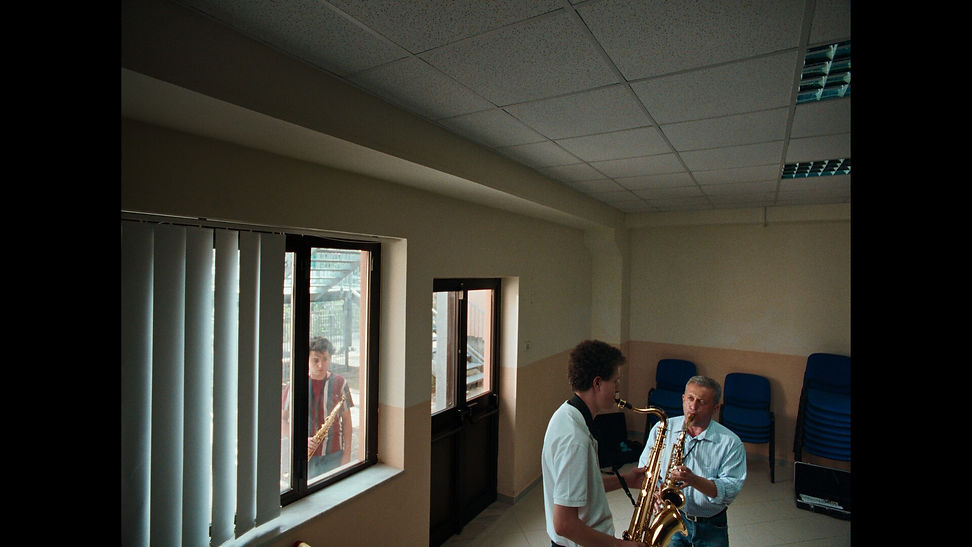
PSAROKOKALO MAGAZINE, LIVE ACTION
OH BOYS
Orchestrating the Fragility of Masculine Pride
Interview with Antonio Donato
“A film which joyfully reminds you that cinema is at its best when it moves from mere depiction to orchestration, marshalling misplaced male pride into a single wry rhythm, and directing its ensemble with a light, unhurried hand just as compelling as its lone saxophonist's transfixing melody.” — Mar Belle — Jury Statement, 18th Psarokokalo ISFF
Fresh off its prestigious premiere at the Quinzaine des Cinéastes (Directors' Fortnight) at Cannes 2026 and its triumphant win for Best Fiction Short Film Direction at the 18th Psarokokalo International Short Film Festival, Oh Boys establishes Milan-based filmmaker Antonio Donato (Shooting Watermelons) as one of the most distinctive visual stylists in contemporary short-form cinema.
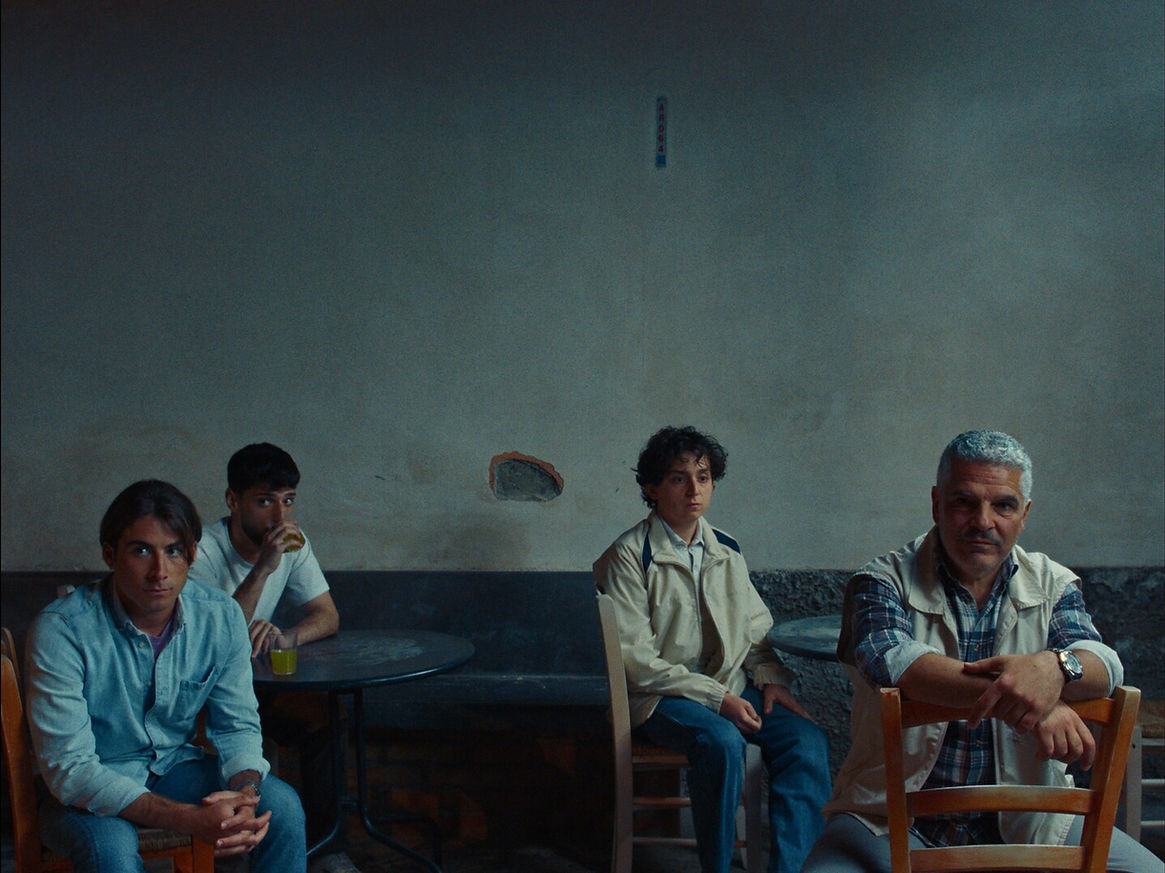
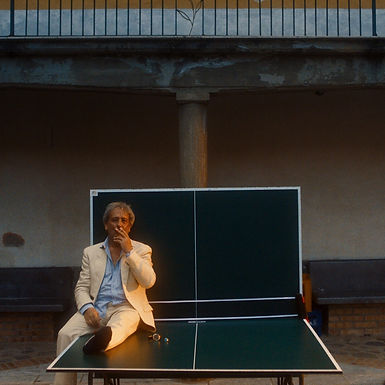
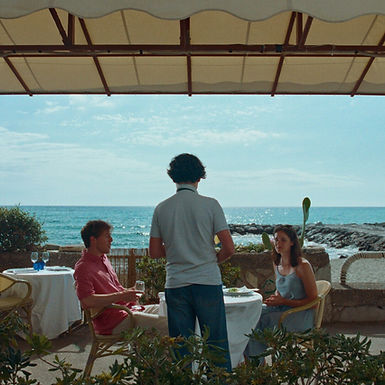
Set in a sun-drenched Italian coastal village, Oh Boys unfolds through three interconnected vignettes exploring the absurdity of male vanity: a local brass band where musicians battle for virtuoso dominance, a tourist desperately over-performing to impress his new girlfriend, and an amateur ping-pong player suffering a crushing defeat at the hands of a young girl. Written by Paolo Carbone, Antonio Donato, Andrea Orsenigo, and Dania Rendano, and produced by Premiere Film alongside VIA73, Andromeda Film, and Courageous Donuts, the short balances wry comedy with profound psychological acuity.
Featuring a stellar cast including Meg Bellamy, Tom Byrne, Luca Lacerenza, and Antonio De Rosa, the film’s performative house of cards begins to collapse when a young saxophonist decides to play simply for the joy of music—defying the oppressive urge to compete.
We spoke with director Antonio Donato about precision planning, the rhythm of comedy, navigating patriarchal fragility, and finding freedom behind static lenses.
Antonio Donato
Rhythm, Irony, and the Mask of Power
I THINK I PUT A LITTLE BIT of myself into every character, as well as traits from people who inspire me. I also give them my own fragilities, and I think that helps me create authentic characters.
When directing, how do you balance the meticulous visual layout and pre-planned shot coverage with the organic spontaneity of your actors on set—especially when integrating non-professional performers alongside the core ensemble?
Antonio Donato: When I direct, I like to give the actors clear dramatic intentions. They never play the comedy. Everything they do comes from their characters’ inner monologue and internal struggle. I think the comedy emerges naturally from that.
Visually, I prepare a lot, while still leaving room for the actors, especially because they interact with non-professional performers. I plan the coverage in advance and, for the more physical scenes (like the ping-pong sequence), I even do pre-shoots with my phone and my friends so I know exactly how many shots I need.
Then, once I’m on set, the rhythm is created instinctively by following the flow of the characters. That naturally creates the pace. But to be able to work that way, I need to prepare a lot beforehand so I know exactly what I’ll need in the editing room. That preparation also gives my editor, Iacopo Calabrese, the freedom to be creative with the material we’ve captured.
The composer, Riccardo Veno, actually wrote the music before we shot the film. During the musical scenes, we could play the tracks on set (or pretend to play them), so the music itself guided the rhythm of the performances. He asked me how long each track should be, so I had to estimate the timing based on my pre-shoots. At the same time, I always asked him to add extra time at the beginning and the end of each piece so I would have flexibility in the edit.
In the end, it’s a mix of preparation, estimation, collaboration and instinct. Preparation gives me the confidence to be fully present on set and to embrace whatever unexpected moments happen.
Oh Boys dissects everyday patriarchy not through overt hostility, but through ironic observation of performative male ego. How do you view the relationship between fragility and the masks men wear to navigate societal pressure?
A.D.: I think I’m more interested in exploring the roots of patriarchal behaviour than its most obvious or extreme consequences. If we really want to question these behaviours, I think we have to understand where they come from: their origins, their causes, and the subtle ways they manifest themselves in everyday life. Many of these behaviours seem harmless or innocent, but maybe they aren’t.
“I’m interested in the fragility behind the mask of power that we wear every day in order to survive. It’s something I’ve experienced myself, with all its contradictions.”
At the same time, it’s simply a reflection of my personality. I’ve always been a fragile little clown, and that’s naturally the way I express myself as a filmmaker. I think humour and irony allow us to approach patriarchy in a way that invites reflection rather than judgment.
The young saxophonist acts as the structural axis of the narrative by simply refusing to compete. What does his non-performative music represent within the competitive framework of modern society?
A.D.: My intention wasn’t to suggest that music itself can free us. I was more interested in asking: who would we be if we didn’t feel this constant social pressure to perform? The music acts almost like a magical spell. The young saxophonist is different from everyone else in the film. Every other character is doing something to impress others or assert their dominance because that’s what society teaches them they need to do in order to survive.
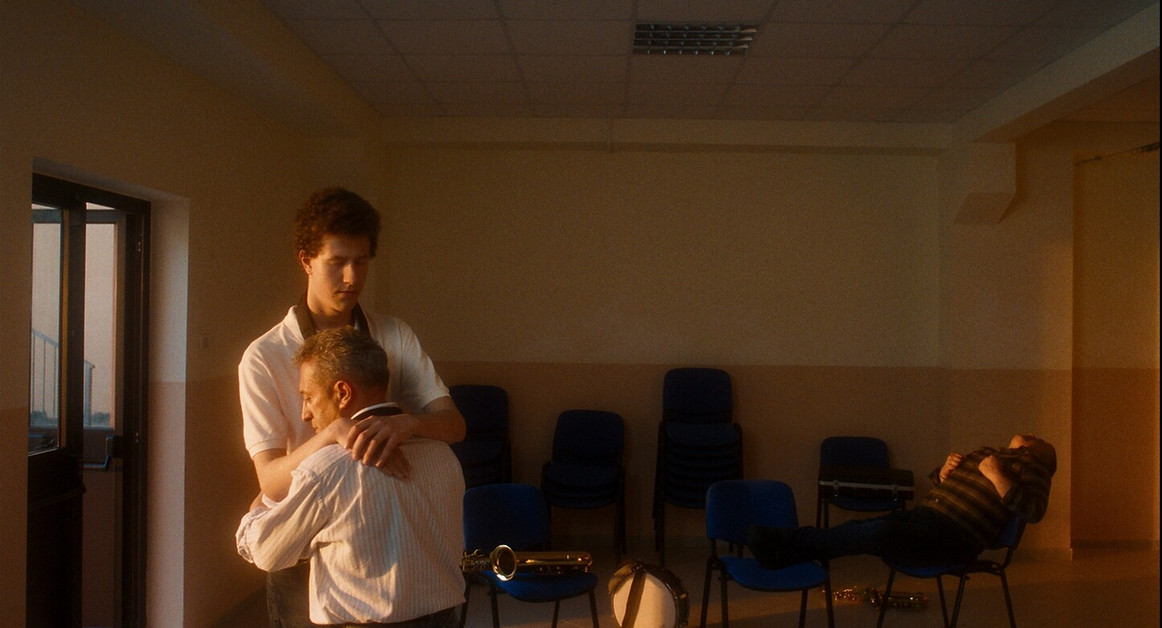
“The saxophonist, instead, plays simply because he enjoys playing. He isn’t trying to impress anyone. He does it for himself, and in the world of the film that’s almost a revolutionary act.”
His music isn’t performative. It’s not about power, relevance or recognition. It’s simply an authentic expression of himself. I think we live in a society that depends too much on other people’s gaze. I wanted to imagine what might happen if, even for a brief moment, we could let go of that need.
Following your success with Shooting Watermelons, Oh Boys reveals a shifting visual maturity—marked by static framing and precise blocking. How has your collaboration with DP Antonio Morra shaped your growing cinematic identity as you prepare for your debut feature?
A.D.: I think the style of Oh Boys is very much in continuity with my previous short, Shooting Watermelons. But Oh Boys gave me the opportunity to experiment further and get closer to finding my own cinematic voice.
A big part of that came from working with new collaborators. I especially loved working with my cinematographer, Antonio Morra, because he constantly challenged some of my ideas in a very constructive way. We pushed each other to create a more distinctive visual language.
For example, I usually placed the camera at eye level and often used zooms. Antonio encouraged me to explore different camera heights while keeping the camera completely static. As a result, we developed a very simple and minimalist visual style that actually required an enormous amount of preparation.
We spent a lot of time thinking about blocking and camera placement, and that process pushed me out of my comfort zone. I think it helped me develop a visual language that feels even more personal. My first feature will probably have a similar aesthetic, but with a more complex narrative and dramatic structure.
Ultimately, though, I think my responsibility as a filmmaker is simply to be honest. The only thing I can really offer is my own experience and perspective. When a film feels sincere, I think audiences can sense that authenticity, and that’s what they connect with.
Author Soultana Koumoutsi